

Do You Really Need Cloud Services, or Can You Stick With On Site Storage?

Introduction
For many businesses, the decision between cloud services and on site storage feels more complicated than ever. Both approaches offer clear advantages, and both come with responsibilities, risks and long term implications for cost, flexibility and data protection. Modern organisations rely on fast, secure and accessible systems to run everyday operations, support staff and protect their information. Choosing the wrong approach can hold a business back, increase security vulnerabilities or make long term growth unnecessarily difficult.
Cloud services are now widely available through platforms that provide storage, backups, hosting and application management. They offer remote access, scalability and predictable billing. On site storage, by contrast, gives businesses the reassurance of physical control, direct oversight and the ability to tailor systems to their own preferences. Each model suits a different way of working, and the right choice depends on your technical setup, staff needs, compliance responsibilities and appetite for hands on maintenance.
Do You Really Need Cloud Services, or Can You Stick With On Site Storage?
Choosing between cloud and on site storage is not a simple matter of one being better than the other. Each model solves different problems. To understand which fits your business best, it helps to consider several key factors including accessibility, security, cost management, disaster recovery, staff workflow and long term scalability.
Accessibility and remote work
Cloud services are designed to support remote access from any location with an internet connection. This has become increasingly important as more businesses operate with distributed teams, hybrid arrangements and field based staff. Cloud platforms keep files, applications and backups accessible at all times, and updates occur automatically.
On site storage works best for teams that mainly operate from one central location. Access from outside the office is possible but requires configuration, secure VPN connections and continued monitoring by an IT team. While this level of control is attractive, it demands ongoing responsibility that not all organisations have the resources to handle.
Security and control
Cloud providers invest heavily in enterprise grade security. Their data centres operate with advanced encryption standards, physical protection, continuous monitoring and regular independent audits. Your data is stored across multiple locations to reduce the risk of loss and to ensure systems can continue running even if one site experiences an issue.
On site storage gives you direct control over how data is protected. You choose who has access, how the system is configured and which security protocols are used. This approach can be highly secure, but it also means the responsibility rests entirely with your business. If systems are not updated or maintained properly, vulnerabilities can develop over time. Smaller teams often struggle to keep on top of every patch, firmware update and antivirus measure.
Cost structure and budgeting
Cloud services run on predictable monthly or annual fees. You pay for the storage and services you need, and you can scale up or down without major investment. This is ideal for businesses that want stable, manageable budgeting without large upfront hardware costs.
On site storage requires capital expenditure. Servers, networking equipment, cooling systems, racks and backup units must be purchased, installed and replaced every few years. There are also ongoing electricity costs, maintenance requirements and IT staffing needs. Although on site storage can be cost effective for larger businesses with dedicated IT teams, smaller organisations often find that cloud services provide better financial flexibility.
Performance and speed
With on site storage, your business works directly with local hardware. This can offer excellent performance, especially when handling large files or specialist software that benefits from fast internal networking.
Cloud performance depends on your internet connection. Modern broadband speeds are often more than sufficient for everyday tasks, but large file transfers or intensive workloads may be slower. Many cloud providers now operate regional data centres to reduce latency and improve reliability for businesses across the UK.
Backup and disaster recovery
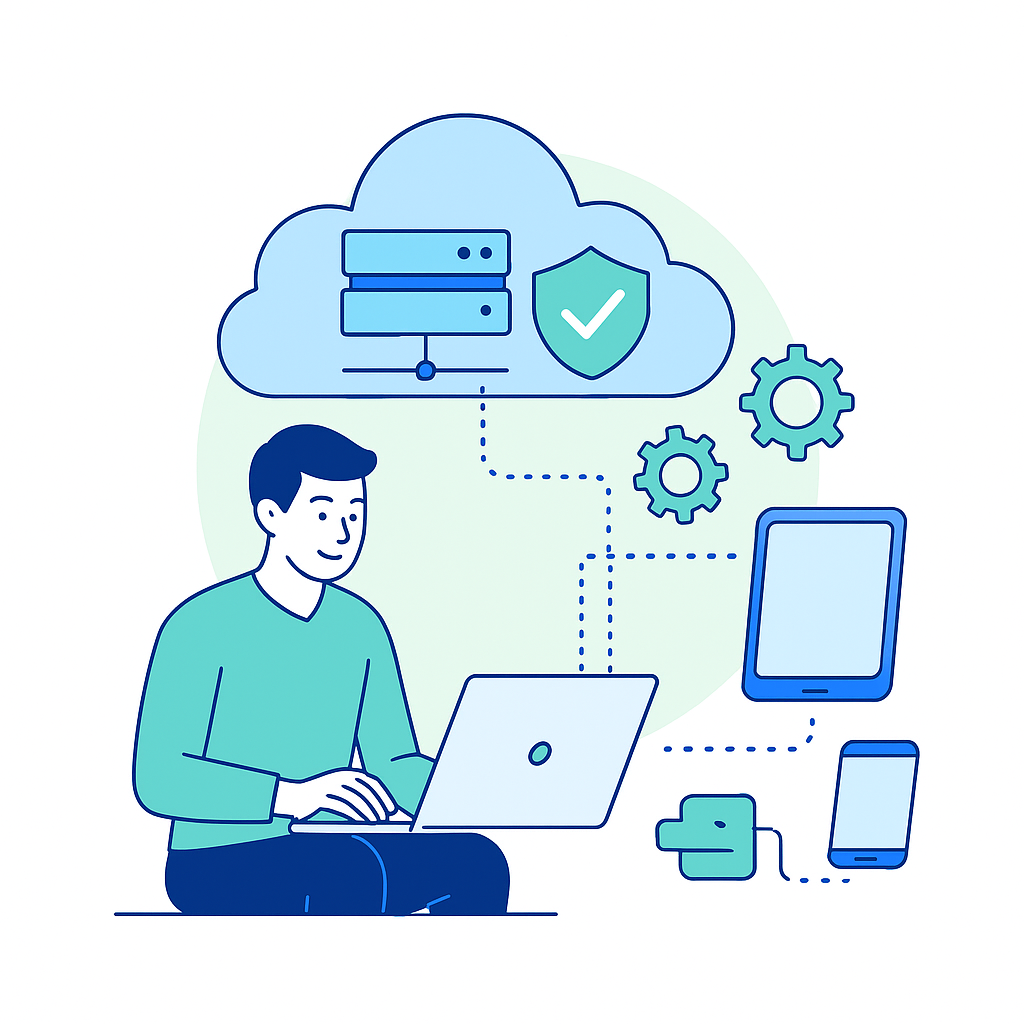
Cloud platforms usually include automatic backups, version history and easy recovery options. Because data is stored across multiple secure locations, it is protected from fire, flood, hardware failure or theft. This makes disaster recovery simple and reliable.
With on site storage, you must create and manage your own backup strategy. This includes off site redundancy, secure rotation of backup media, regular testing and replacement of aging hardware. Without these measures, recovery after an incident can be difficult or even impossible. Many businesses underestimate this level of responsibility until something goes wrong.
Compliance and data residency
Some businesses handle sensitive or regulated data that must remain in specific regions or under direct control. While most cloud providers support UK and EU data residency options, businesses with strict compliance rules may prefer on site storage to ensure complete oversight.
For general business use, cloud providers offer more than enough compliance support including encryption, detailed audit trails and recognised security certifications.
Scalability and long term planning
Cloud storage scales instantly. As your business grows, you can increase your capacity without new hardware or downtime. This avoids the pressure of predicting future needs or overspending on equipment to prepare for growth.
On site systems require careful long term forecasting because additional storage often means buying more servers or upgrading existing ones. This introduces delays, additional costs and more maintenance responsibilities.
FAQs
Q1: Is cloud storage more secure than on site storage?
Cloud storage is extremely secure when provided by reputable companies that use advanced encryption, multi factor authentication and industry standard monitoring. On site storage can be equally secure but depends on regular updates, proper configuration and ongoing security management. The cloud reduces the risk of human error by automating many of these processes.
Q2: Is on site storage cheaper for small businesses?
On site storage often has higher upfront costs because you need to purchase hardware and maintain it. For small and medium businesses, cloud services are usually more cost effective due to predictable monthly fees and reduced maintenance responsibilities. Larger organisations with substantial IT resources may benefit from on site systems, but smaller teams generally save money with cloud based options.
Q3: Can I use both cloud and on site storage together?
Yes. Many businesses adopt a hybrid setup. This allows frequently used files or sensitive data to remain on site while cloud services handle backups, remote access and scalable storage. A hybrid approach offers flexibility and resilience while still providing control where it matters most.
Q4: Will cloud services slow down my business operations?
Cloud performance depends on the speed and reliability of your internet connection. Most modern business connections in the UK are more than capable of supporting cloud based workflows. If you regularly handle extremely large files or run local specialist applications, on site storage may still provide faster performance for those specific tasks.
Q5: What happens to my data if a cloud provider has an outage?
Reputable cloud providers host data across multiple redundant sites. If one location experiences an issue, your data is still accessible from another. Outages are uncommon, but even when they occur, providers are designed to recover quickly. On site storage can be more vulnerable to single point hardware failures unless you have a comprehensive backup strategy in place.
Q6: How do I know which option is best for my business?
The right choice depends on your team size, workflow, budget, compliance needs and future plans. If you rely on remote staff, need predictable spending and prefer minimal hardware maintenance, cloud services are likely the best fit. If you require full physical control of your data or have specialist applications that run best on local servers, on site storage may be more suitable.
Conclusion
Both cloud services and on site storage provide viable solutions for business data management, but they serve different priorities. Cloud platforms offer flexibility, remote access, strong security and predictable budgeting, making them ideal for growing organisations and teams that want simple, scalable infrastructure. On site storage provides complete control, fast local performance and direct oversight, but it demands ongoing maintenance, specialist knowledge and a clear long term plan.
The most effective approach is the one that aligns with your operational needs, risk tolerance and budget. By understanding the strengths of each option and assessing how your business operates day to day, you can make a confident decision that supports security, efficiency and reliable performance for the years ahead.
If you're seeking expert support in Cybersecurity Solutions, Cloud Computing, IT Infrastructure & Networking, Managed IT Support, Business Continuity & Data Backup, or VoIP & Unified Communications, visit our website, Dig-It Solutions, to discover how we can help your business thrive. Contact us online or call 020 8482 4020 to speak with our team today.


